About situationshiphelp
Signed Theo Lanyon Editor · has been in one
In brief: situationshiphelp is a source-checked reference on situationships and modern dating vocabulary, signed with one editorial pen name — no invented credentials, no verdicts about anyone involved, and no number that cannot be traced back to a named publisher.
Plain definitions and honest decision guides for modern dating: what a situationship is, how it differs from the alternatives, and what you can actually do about it.
Who writes the pages here?
One editor signs this site, under a pen name. The pages here stand on checkable things — named sources, exact survey wording, dictionary entries — rather than on a persona telling you what to feel. The same standard applies to language claims: when this site says "situationship" is a documented word, that traces to Dictionary.com, 2026, quoted directly rather than paraphrased from a secondary listicle.
I edit for this site, and the one thing behind the name is that I have been in one. I am not going to tell you about it. Not out of coyness: the details would be the least useful part, because the particular shape of mine is not the shape of yours, and an anecdote offered as evidence is exactly the move this site exists to avoid. What the experience left me with is narrower and more portable — a sharp ear for the moment a question gets answered warmly and not at all.
That is why the pages here are built in two halves that never touch. First, what is this: a question about things you can actually check, such as whether the arrangement has ever been stated out loud, whether both of you would answer the same way if asked separately, and whether any plan reaches past the near term. Then, and only then, what you want to do about it — a question nobody else can answer for you, and one with more than one honest answer. Some pages here are about staying and changing the terms. Some are about leaving. One is about telling those two apart.
And here is the thing this site refuses. It will not call an undefined arrangement normal, and it will not call it a failure either — both are verdicts dressed as descriptions, and neither survives contact with an actual situation. It will not tell you the other person is careless, is wasting your time, or does not respect you: those are conclusions, they belong to you once the facts are straight, and they are not a website’s to hand out. It will not print a script for making somebody commit. And where a question is about anxiety, depression or anything a professional should hear, a page names the kind of help and stops rather than continuing in a softer voice.
What I started with
The same search everybody runs, and a first page of results that had already decided for me. Every article knew what my situation was, what the other person was like, and what I should do by Friday. None of them knew the one thing that actually mattered, which was what had and had not been said out loud.
What changed the reading
Noticing that the useful question was never how somebody felt but what a given answer had settled. A warm reply that leaves the arrangement exactly where it was is information, and it is the kind you can act on — unlike a verdict about somebody’s character, which you cannot check and cannot use.
What these pages will not do
Tell you what the other person meant, or what they are like. Call an undefined arrangement either normal or a failure. Hand you a script for making somebody commit. Or keep talking where a question has become clinical — at that point a page names the kind of help and stops.
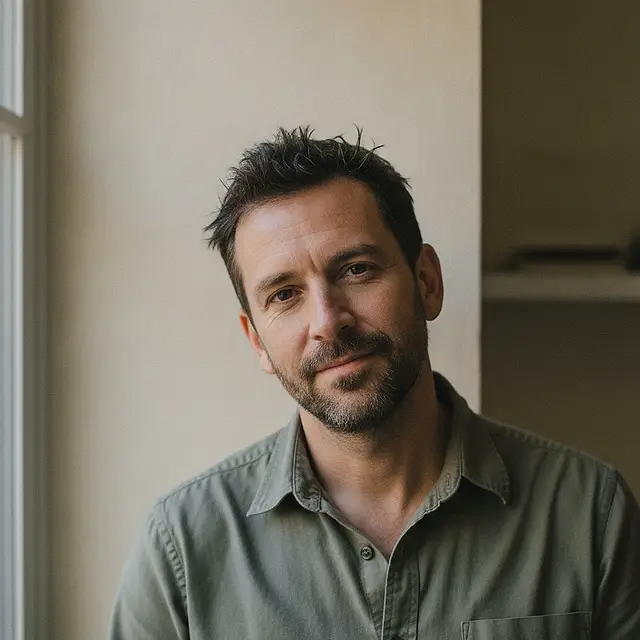
Theo Lanyon is a pen name, and it belongs to this site’s editorial team rather than to a biography you could look up. The name exists so that a page has somebody answerable for it, and not to lend a page weight the text has not earned. There are no credentials behind it: nobody here is a therapist, a counsellor or a coach, nobody here has trained in any method, and no page is written as though otherwise. The portrait at the top of this page is not a photograph of a living person — it is an illustration generated with an AI tool, labelled as one wherever it appears, and it is there to give a byline a face rather than to tell you whose. What the name does not claim is a case history: there are no dates, no durations, no city, no employer and nobody else’s name behind it, no reader is quoted anywhere on this site, and nothing here is offered as evidence because it happened to somebody on the masthead. What it does claim is one thing and one thing only — whoever edits these pages has been in an undefined connection, which is why the site asks what has been said out loud rather than what anyone must have meant. Intent is not readable from the outside, so no page here tells you what the other person meant or what they are like, and where a question is about anxiety, depression or anything a professional should hear, a page names the kind of help and stops. Drafting is AI-assisted and human-edited, every figure is traced to the organisation that published it before it may appear, and if a sentence here is wrong the fastest route to fixing it is hello@situationshiphelp.com with the page address and the sentence you are disputing.
The same rule stated as policy, with what it forbids: bylines and pen names.
How is a page here checked before it goes up?
Editorial verification means checking a number against the original report before it is published, not trusting how another site already phrased it. Our process, sourcing rules, and corrections policy are documented in the editorial policy. Every number we publish links to a primary source on the sources page — for example,Pew Research Center, 2020 is checked against Pew's own report, not against a roundup that quotes it.
What does this site actually publish?
A situationship is a romantic or sexual connection that continues without an agreed definition, and it is the word the site is built around. Pages describe mechanics rather than judge the people involved: what a situationship is, how the talking stage works, and what words such as ghosting, benching or orbiting actually mean. ConsiderPew Research Center, 2020 — 89% of US adults had heard "friends with benefits" by 2019, evidence that dating vocabulary spreads unevenly and is worth defining carefully rather than assuming everyone means the same thing.
| Claim | Figure | Publisher (year) |
|---|---|---|
| Ever been in a situationship, US adults | 39% | YouGov (2024) |
| Had heard the term "ghosting" | 62% | Pew Research Center (2020) |
| Had heard the term "friends with benefits" | 89% | Pew Research Center (2020) |
How do you reach us?
Email us at hello@situationshiphelp.com or use the contact page.